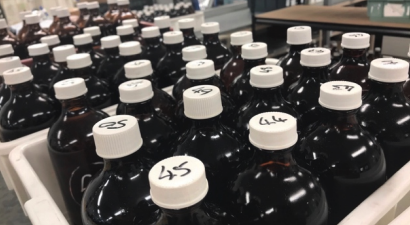
Dissolved Gas Analysis (DGA) is an exceptionally sensitive diagnostic technique used to assess the internal condition of oil-filled transformers. Because gases are measured in parts per million (ppm), even very small variations between samples can significantly influence interpretation. When these variations are caused not by real transformer behaviour but by cross contamination, the consequences can be misleading and potentially costly.
Interpretation methods such as IEC 60599, IEEE C57.104, and the Duval Triangle rely heavily on precise gas concentrations and ratios. A difference of only a few ppm—if introduced artificially—can shift diagnostic outcomes, alter fault classification, and undermine confidence in asset condition assessments.
Why Small ppm Changes Matter
DGA interpretation is not based solely on absolute gas concentrations but on relationships between gases. Ratio-based methods and graphical tools are highly sensitive to relative changes, meaning that even minor contamination can distort the diagnostic picture.
For example, a change of 2–5 ppm in acetylene (C₂H₂) or hydrogen (H₂) may seem insignificant in isolation. However, when used in ratio calculations or plotted on diagnostic tools, this small variation can lead to a completely different fault classification.
Impact on IEC 60599
IEC 60599 uses a combination of gas ratios—such as C₂H₂/C₂H₄, CH₄/H₂, and C₂H₄/C₂H₆—to classify faults into categories like partial discharge, low-energy discharge, or thermal faults at varying temperatures.
Because these ratios often involve small denominator values, they are particularly sensitive to slight changes. For instance, if acetylene is artificially increased by just a few ppm due to contamination, the C₂H₂/C₂H₄ ratio may rise enough to suggest arcing (D2 fault) instead of a lower-energy discharge. A small increase in hydrogen could shift the CH₄/H₂ ratio, leading to an incorrect indication of partial discharge.
These misclassifications can trigger unnecessary investigations or mask the true nature of a developing fault. In trending scenarios, inconsistent sampling may also create the illusion of fault progression where none exists.
Impact on IEEE C57.104
IEEE C57.104 focuses on total dissolved combustible gas (TDCG) levels and individual gas thresholds to define condition states and recommend actions.
While this method is somewhat less sensitive to ratios than IEC 60599, it is still vulnerable to small contamination effects. A slight increase in key gases such as hydrogen or ethylene may push the transformer from Condition 1 (normal) to Condition 2 (elevated). Incremental increases in TDCG due to contamination can falsely suggest a worsening trend, prompting increased monitoring or maintenance actions.
Because decisions under IEEE C57.104 are often tied to threshold values, even a few ppm can be enough to cross a boundary—particularly when gas levels are already near limits. This can result in unnecessary operational responses or misallocation of maintenance resources.
Impact on the Duval Triangle
The Duval Triangle is one of the most widely used graphical tools for fault diagnosis, based on the relative percentages of methane (CH₄), ethylene (C₂H₄), and acetylene (C₂H₂).
Because the Duval Triangle uses normalized percentages, even small absolute changes in gas concentrations can significantly alter the plotted position. A minor increase in acetylene due to contamination can shift the point toward D1 or D2 regions, indicating electrical discharge instead of thermal fault. Small variations in ethylene or methane can move the diagnosis between T1, T2, and T3 thermal fault zones.
The boundaries between these zones are often narrow, meaning that slight contamination can cause a point to cross from one fault type to another. This is particularly problematic when trending multiple samples, as inconsistent data can produce erratic movement across the triangle, obscuring the true fault behaviour.
Real-World Implications
The combined effect of these interpretation methods means that cross contamination—even at very low levels—can have a cascading impact: false positives indicating faults that do not exist, false trends suggesting deterioration when the transformer is stable, misdiagnosis leading to incorrect identification of fault type, and unnecessary maintenance resulting in increased cost and potential outages.
In critical assets, these outcomes can undermine confidence in DGA as a diagnostic tool and lead to conservative or overly reactive decision-making.
The Importance of Consistent Sampling
Given the sensitivity of IEC 60599, IEEE C57.104, and the Duval Triangle, maintaining consistent and contamination-free sampling is essential. Repeatability ensures that observed changes in gas concentrations reflect actual transformer conditions rather than artefacts of the sampling process.
This highlights the importance of dedicated sampling practices, proper flushing, and the elimination of shared or poorly cleaned equipment. Without strict control of sampling quality, the precision of DGA interpretation methods becomes a liability rather than an advantage.
Conclusion
DGA is a powerful diagnostic tool precisely because it can detect very small changes in gas concentrations. However, this sensitivity also makes it vulnerable to cross contamination. A difference of only a few ppm—if not representative of the transformer—can significantly alter the outcomes of IEC 60599, IEEE C57.104, and the Duval Triangle.
For asset managers and engineers, the key takeaway is clear: accurate interpretation depends on accurate sampling. Eliminating cross contamination is not just good practice—it is essential for ensuring that DGA results lead to correct, confident, and cost-effective decisions.